Pool Motors
Is your pump not turning on? Turning off when it’s not supposed to? Neighbors complaining about a squealing/shrieking noise? Chances are it’s time for a new motor.

Repairing or replacing your pool equipment doesn’t have to ruin your fun in the sun. We keep our vans fully stocked with parts from multiple manufacturers, allowing us to make most repairs/replacements in a single appointment. It’s our mission to provide the fastest service times possible, getting you back to splashing in your pool in no time!
This enables us to schedule and perform repairs for all our clients as expediently as possible. We believe in empowering our clients to handle this aspect of pool ownership themselves, so we can quickly tackle the complex repairs for them! We are happy to provide guidance or answer any questions you may have regarding cleaning, maintaining, or balancing your pool.
How do I know if my pool motor needs repair or replacement?
Common signs of a failing pool motor include loud humming or grinding noises, overheating, failure to start, or the pump shutting off unexpectedly. If your motor is over 7–10 years old or repeatedly trips the breaker, it may be more cost-effective to replace it rather than repair it.
What are the warning signs that my pool pump is failing?
Watch for low water circulation, air bubbles in the pump basket, leaks around the pump housing, or unusual noises. A failing pump can quickly affect water quality and equipment performance, so prompt service is recommended.
When should booster, cleaner, or auxiliary pumps be serviced?
These pumps should be inspected if your pressure-side cleaner stops moving properly, loses pressure, or makes excessive noise. Routine maintenance helps extend the life of these specialty pumps and keeps your cleaning system efficient.
How can I tell if my pool plumbing has a leak?
Signs include unexplained water loss, soggy areas around the pool, air in the return lines, or reduced circulation. Professional leak detection uses pressure testing and specialized equipment to pinpoint underground or hidden plumbing issues.
What pool filter problems typically require repair?
Cracked filter tanks, broken internal grids or cartridges, pressure that stays too high or too low, and persistent cloudy water often indicate filter issues. Timely repairs help protect your pump and maintain proper water clarity.
When should pool automation systems be repaired or updated?
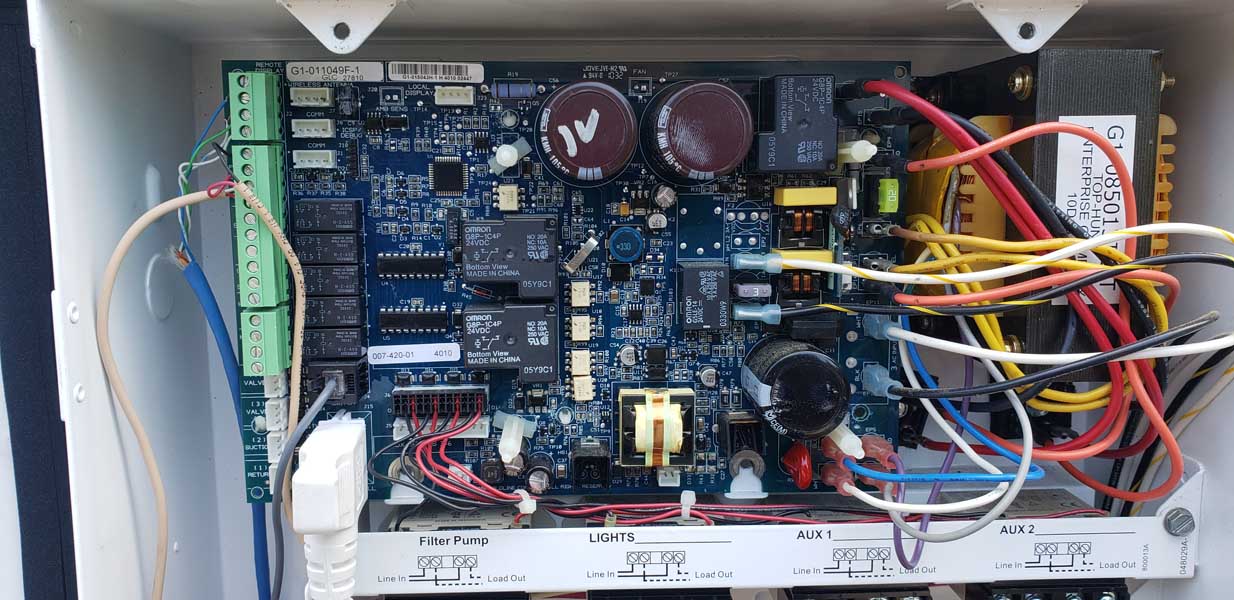
If your automation panel is unresponsive, losing programming, failing to control equipment, or having connectivity issues with mobile apps, it may need repair or upgrading. Modern automation can improve efficiency and convenience.
What are common problems with pool chlorinators?
Chlorinators may need service if chlorine levels are inconsistent, the feeder is clogged, or there are visible leaks or cracks. Regular cleaning and inspection help maintain proper sanitation.
How do I know if my pool salt system needs repair?
Warning signs include low chlorine production, “low salt” or “check cell” alerts, calcium buildup on the cell plates, or cloudy water. Many issues can be resolved with professional salt cell cleaning or component replacement.
What symptoms indicate my pool heater needs repair?
If your heater won’t ignite, cycles on and off, heats slowly, or displays error codes, it likely needs service. Annual heater maintenance helps prevent costly breakdowns and extends equipment life.
When should a pool diving board be repaired or replaced?
Replace or repair your diving board if you notice cracks, excessive flexing, loose mounting hardware, or surface wear. For safety reasons, damaged boards should be addressed immediately.
Why are my pool lights not working properly?
Pool light issues often stem from burned-out bulbs, water intrusion in the fixture, tripped GFCI breakers, or transformer problems. Because pool lighting involves electricity and water, professional repair is strongly recommended.

Fox Pools LLC is a swimming pool service and repair company. We perform pool service and repair, pool inspections, pool safety covers, pool openings, pool closings and more! We serve all of Hampton Roads.